Q: What Are The Benefits of Federal Trademark Registration?
With all the aspects of your business that require investments, is pursuing federal trademark protection with the USPTO worth it in the end?
What are the benefits of federal trademark registration, and is it worth the investment for your business?
If you've been using your business name for years, built a reputation around it, and have customers who recognize it, you might wonder what federal registration actually gives you that you don't already have.
Or if you are just starting out, and have lots of needs competing for your start-up budget as you grow your brand, should getting your trademarks onto the federal register be a priority?
In this episode, I'm breaking down the practical benefits of federal trademark registration and why it can matter as your business grows. I'll explain the difference between common law trademark rights and federal registration, including how registration provides nationwide rights, a legal presumption of ownership, and additional ways to prevent others from using confusingly similar names.
I also lay out the benefits of appearing on the federal trademark register, using the ® symbol, and having more options when addressing potential infringement. Because registration isn't a one-size-fits-all investment, I'll discuss what it doesn't do, when it might make sense to prioritize it, and how to think about protecting the brand you've worked hard to build.

Topics covered in this podcast episode:
The difference between common law trademark rights and federal trademark registration, and why geographic limitations matter
How federal registration provides nationwide trademark rights and why the timing of your application can be important
The legal presumption of ownership and validity that comes with registration, including the potential for incontestable status after five years
How the federal trademark register provides public notice and can help prevent confusingly similar trademark applications
The benefits of using the ® symbol and additional options for addressing infringement, including customs protection and online takedowns
What federal trademark registration doesn't do, including enforcing your rights, expanding to cover new goods and services, or providing automatic international protection
Which business milestones and growth plans can make trademark registration a priority, and how to decide what to protect first
New Here?
I'm Chelsea Fournier—a U.S. trademark attorney for business owners and credentialed professionals who've built something worth protecting. I work with therapists, coaches, consultants, speakers, and other service providers and practitioners who are past the idea stage—established enough that a name, logo, or tagline has real weight behind it.
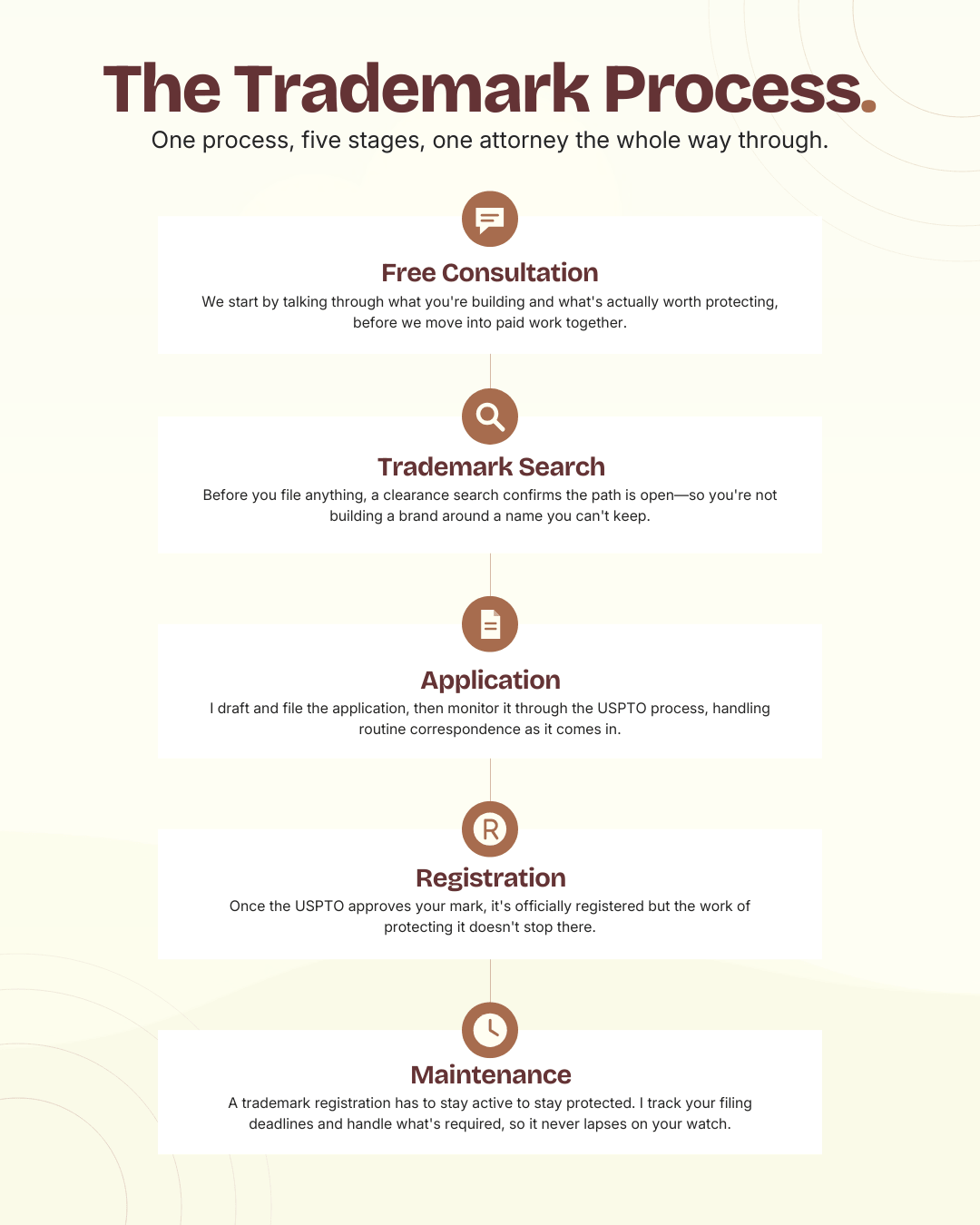
Trademark work is the whole of my practice, not a service tacked onto something else. Every engagement moves through the same five stages — consultation, search, filing, intent-to-use, and maintenance — and I meet clients wherever they're starting in that process.
→ If you're not sure trademark protection makes sense yet, or just want clarity on timing and cost, the Free Consultation is a no-pressure place to start.
→ If you need to know whether your name, logo, or tagline is actually available, the Trademark Strategy Session and Clearance Report + Call screen for conflicts before you invest any further.
→ If you're ready to protect what you've built, Filing Your Application and the intent-to-use filings that follow get your mark on record the right way.
→ If you already have a registration, Registration & Maintenance keeps it active and enforceable, so the protection holds up long after the paperwork's done.
Wherever you're starting, there's a path that fits. Explore my Services + Flat Fee Pricing Schedule for more details.
Find the Trademarks With Chelsea Podcast On Your Favorite Podcast Player

Related Episodes:
🎧 Q: Do I Need a Trademark If I Have an LLC For My Business?
Connect With Chelsea
The unedited podcast transcript for this episode of the Trademarks with Chelsea Podcast follows:
This podcast is for educational purposes only and isn't legal advice.